



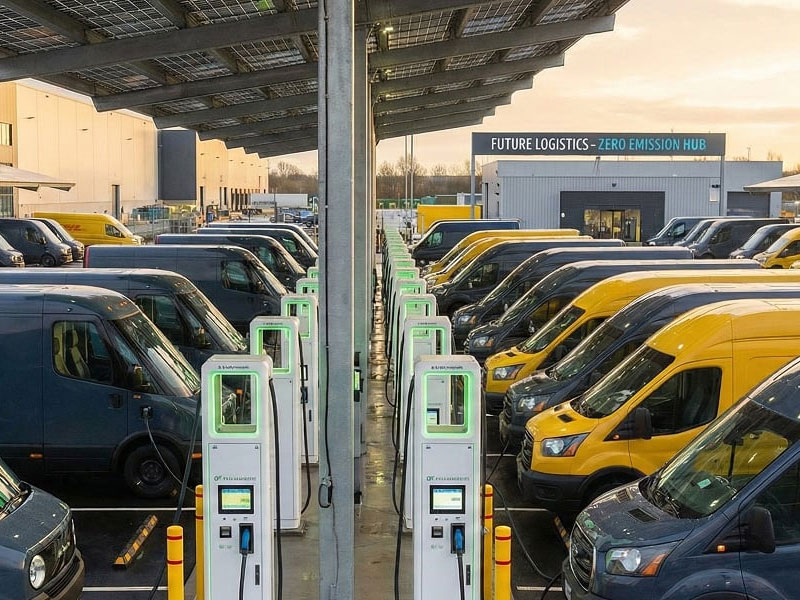
The UK fleet sector is driving the transition to electric vans at a pace that shows no signs of slowing. More than 60% of EVs in the UK are now owned by businesses, with electric vans accounting for 8.4% of the total market.
With the Zero Emission Vehicle Mandate now law and the 2030 deadline for ending diesel van sales firmly in place, fleet managers are under mounting pressure to build a credible commercial case for electrification, not just an environmental one.
Simon Ridley, Managing Director at Dawsongroup vans, a nationwide commercial van rental company specialising in long-term fixed-term rental agreements, has seen the business case for electric vans sharpen considerably over the past 12 months.
“There has been a real shift in how fleet decision-makers are approaching this. A year ago, conversations centred on scepticism about range and charging. Now, the questions are far more specific. What will this actually cost us? Where will the savings land? How quickly will we see a return?”
Here, with experts at Dawsongroup vans, we explore what the business case for electric vans actually looks like in practice, where the savings are being realised, and which financial decisions are having the greatest impact on return on investment.
The Numbers Behind the Business Case for Going Electric
While the upfront cost of an electric van remains higher than a diesel equivalent, charging an electric van on a business overnight tariff can cost as little as 5p to 8p per mile, compared to around 15p to 20p per mile for diesel. Fuel savings can add up to over £2,000 annually for a van covering 20,000 miles a year.
Independent analysis from Fleet News estimated electric van maintenance costs at around 35% below diesel equivalents on a like-for-like basis, with service intervals typically extending to 24,000 miles or two years, roughly double the typical diesel specification. For fleet-dependent businesses this means less time in the workshop which equates to less downtime. Although this represents a straightforward saving to calculate, it’s something that was often overlooked when building the initial business case.
“The total cost of ownership picture has become genuinely compelling for many fleet profiles,” says Ridley. “When you factor in fuel, servicing, and the regulatory costs around clean air zones, the payback period is shortening. For businesses operating in or around urban areas, the numbers are particularly strong.”
What Clean Air Zones Are Adding to the Urgency
For businesses running commercial vehicles into UK cities, the financial impact of staying with diesel is increasing. A growing number of UK cities now operate clean air zones, spanning London, Birmingham, Bristol, Manchester, Sheffield, Oxford and beyond, with diesel van operators facing daily access charges that differ by location. In Oxford, for example, those charges doubled in August 2025, rising to £20 per day. London’s Congestion Charge of £12.50 per day is waived for electric vehicles, providing meaningful relief for operators with capital city routes.
These ongoing charges erode any perceived cost advantage from avoiding the higher upfront cost of an electric van, particularly for fleets covering multiple restricted zones each week.
“Clean air zone exposure is something a lot of businesses have not fully costed,” says Ridley. “When you start adding up the daily charges across a fleet over the course of a year, the financial argument weakens for sticking with diesel.”
Choosing How to Finance the Switch
For businesses feeling cautious towards the capital outlay, long-term rental offers an alternative route into electrification. The ZEV mandate now requires 38% of new van sales to be zero emission by 2026, up from 10% in 2024. This is shifting what manufacturers prioritise and making the supply landscape for electric vans more favourable. Combined with improving residual values, this means that rental and leasing costs for electric vans are becoming more competitive.
“Purchasing outright is not the only option for fleet operators looking to go electric,” explains Ridley. “Long-term rental removes the barrier of the initial outlay and takes the responsibility for maintenance and servicing off the business. For many operators, that combination of cost predictability and reduced administrative burden makes the transition more straightforward.”
Where Fleet Leaders Say the Real ROI Is Being Found
Businesses that have moved beyond trial phases frequently point to three areas where the return on investment is most tangible: fuel cost reduction, lower maintenance spend, and the avoided costs associated with clean air zone compliance.
UK businesses that have made the switch are reporting combined annual savings on fuel and maintenance in the region of £2,400, with those operating in urban areas or covering higher mileages often seeing bigger savings.
Driver experience is also contributing to ROI in ways that are less obvious on a spreadsheet. Fleet leaders report improved driver satisfaction and lower staff turnover in teams that have moved to electric vehicles, with drivers citing quieter operation and reduced physical fatigue on longer shifts.
“The businesses that are building the strongest cases are the ones joining the dots between the quantifiable savings and the operational benefits,” adds Ridley. “The financial case has become solid enough to stand on its own. What surprises a lot of operators is how much else moves in the right direction alongside it.”
Sources