


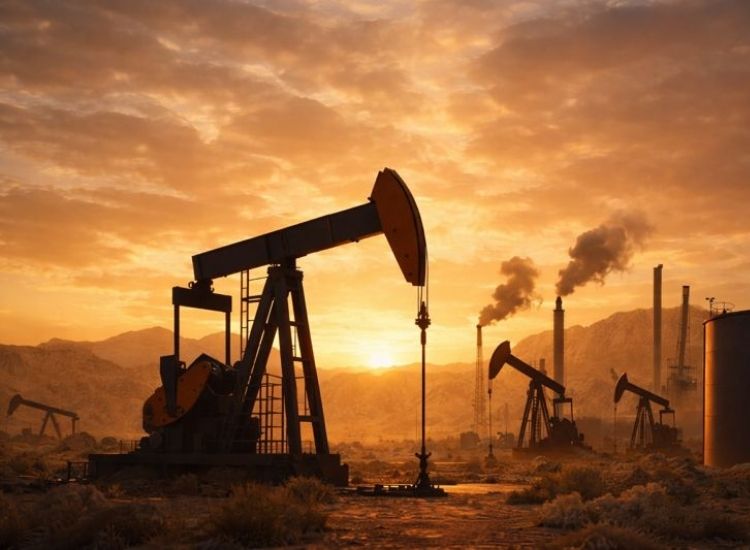
Rising production, strong China ties, and fresh uncertainty shape Iran’s energy outlook.
Dubai, United Arab Emirates, 12 January 2026 – In recent months, Iran has reached some of its highest oil production levels in years. This growth has happened despite long-standing United States sanctions on its energy exports and ongoing regional tensions. By building strong trade links with China and other partners, Iran has continued to sell its crude oil and maintain a steady flow of exports. Many analysts believe this trend could continue into 2026, although new global developments may slow this progress.
Iran remains one of the world’s major oil producers, even though sanctions have reduced its influence in the global energy market. The United States first reinstated sanctions on Iran’s energy sector in 2018. Since returning to office, former US President Donald Trump introduced additional restrictions on Iranian oil, making trade more complex for buyers and sellers alike.
Despite these limits, Iran holds a strong position in terms of natural resources. The country has the world’s fourth-largest proven oil reserves, accounting for about 9 percent of global supply, behind Venezuela, Saudi Arabia, and Canada. It also has the second-largest proven natural gas reserves worldwide. Within OPEC, Iran is the third-largest crude producer and the fourth-largest exporter.
Iran’s oil output peaked in the 1970s, when it produced more than 6 million barrels per day. Decades of war, sanctions, and limited investment reduced production significantly. However, output has slowly recovered in recent years, rising from around 2.9 million barrels per day in 2019 to an estimated range of 3.2 to 4 million barrels per day in 2024.
This recovery has been supported by weaker enforcement of sanctions and Iran’s continued efforts to find alternative trade routes. China has played a key role in this process. As the world’s largest oil importer, China has become Iran’s main customer, buying around 90 percent of Iran’s shipped crude. In the first half of 2025, Iranian oil made up roughly 13.6 percent of China’s total oil imports.
Iranian crude has attracted Chinese buyers mainly because of its lower price. Discounts of seven to eight dollars per barrel below global benchmarks make the oil appealing, especially for independent Chinese refiners. These refiners, often called teapots, are mostly based in Shandong province and represent about a quarter of China’s total refining capacity. State-owned Chinese oil companies generally avoid Iranian crude due to sanctions risks.
In recent months, some Chinese refiners increased purchases of Iranian oil stored offshore or in bonded storage after receiving new import quotas. However, US penalties on several Chinese refiners have made others more cautious. While Beijing continues to reject unilateral sanctions and defends its trade as legal, uncertainty remains.
Even with higher oil exports, Iran’s economy is under strain. Experts note that earning revenue is only part of the challenge. Moving oil income back into the country is difficult due to banking restrictions. Inflation remains high, the national currency has weakened, and fuel subsidies have become costly. These pressures have contributed to public dissatisfaction and economic stress.
Global uncertainty has increased following recent US military action in Venezuela, another oil-rich nation under US sanctions. The event has raised concerns among oil traders about the risks of dealing with sanctioned crude. As a result, some buyers may reconsider their exposure to Iranian and Venezuelan oil in the coming years.
Looking ahead, Iran’s oil production story is one of resilience mixed with risk. Strong demand from China has helped sustain exports, but growing geopolitical uncertainty could reshape trade patterns in 2026. Whether Iran can maintain its current momentum will depend on market confidence, enforcement of sanctions, and the willingness of buyers to continue navigating complex global conditions.